
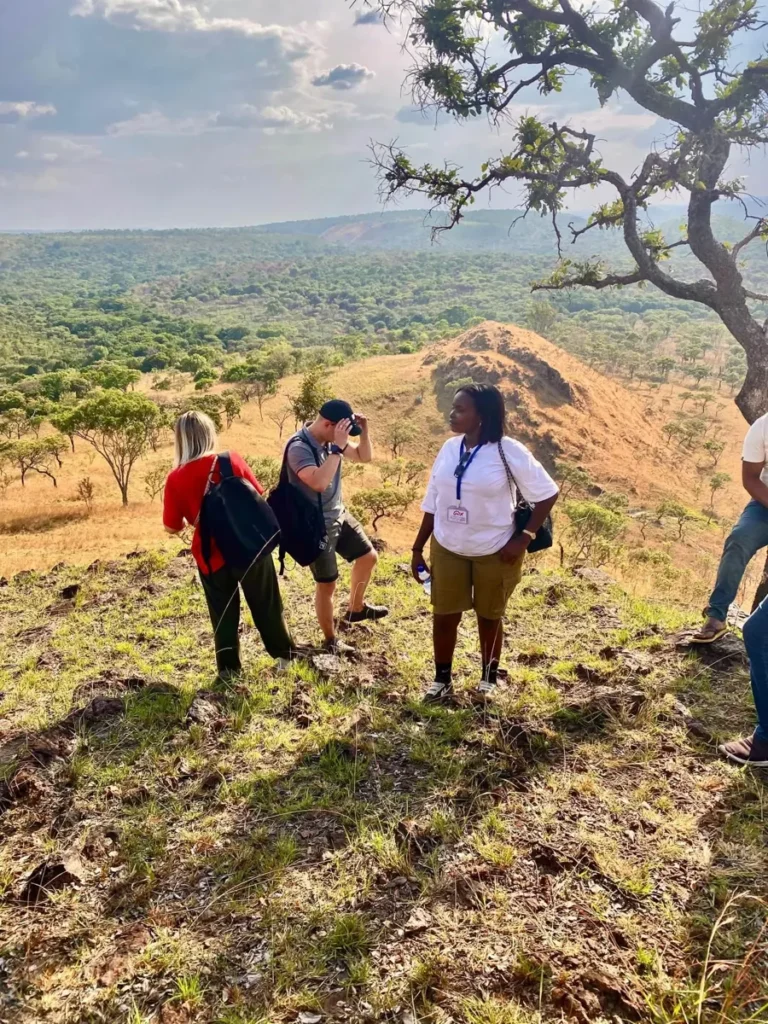
You do not have to be an experienced trekker to enjoy time on foot in Burundi. The important decision is choosing a walk that matches your actual comfort, rather than choosing a famous place first and hoping the route will suit you. A beginner’s outing can be built around a clear view, a forest section or a gentle introduction to the highlands. Its success comes from appropriate planning and a pace that leaves room to notice the surroundings.
This guide helps you describe your needs and discuss a route with M Travel. It is not a technical route description, a medical assessment or a promise that every trail is suitable for every person. The guide and responsible site staff should confirm conditions for the selected day. If you are choosing between landscape types, compare the approach to a Kibira forest walk with the wider itinerary ideas in our Burundi package collection.
Describe what you can comfortably do now
“I am a beginner” is a useful starting point, but it leaves many practical questions unanswered. Tell the team about the walks you have done recently: the approximate time on your feet, whether the route was flat and how you felt afterwards. A person who regularly walks for an hour on city pavements may still find a short uneven slope unfamiliar. Honest detail helps more than an optimistic fitness label.
Explain specific difficulties, such as steep descents, high steps or prolonged standing. You do not need to share private medical information in a public form. If a health condition affects participation, discuss the relevant practical requirements privately with the team and obtain appropriate personal advice where needed. The goal is to identify a suitable outing before travel, not to discover a mismatch at the beginning of the path.
Ask about the return, not only the destination
A viewpoint can sound close when described only by the time needed to reach it. Ask whether the route returns the same way, continues to another pickup point or includes an ascent on the way back. Find out whether there are sensible turnaround points. A clear return plan gives a beginner confidence and lets the guide adapt before fatigue becomes the main feature of the day.
Also ask how walking time differs from the total outing. A route may include pauses, a guide’s explanation and transport before and after the walk. These are useful parts of the experience, but they should not be confused with time on foot. Agree on the broad shape of the day and leave enough room afterwards for a meal, rest or a comfortable transfer.
Choose a purpose that does not depend on reaching the farthest point
A first guided walk can be rewarding because of a particular subject: landscape photography, trees, birds or an introduction to the relationship between paths and cultivated hills. When there is something interesting to notice throughout the route, turning back early does not make the outing feel wasted. A distant summit should not be the only reason to enjoy being outside.
Give the guide one or two interests they can build into the pace. For example, someone who likes photography may prefer several short, approved stops over a continuous march. A visitor interested in plants may want explanations at a few representative places. These preferences turn a beginner’s walk into a deliberate experience rather than a reduced version of somebody else’s ambitious hike.
Use familiar, appropriate equipment
Ask the team what footwear and clothing suit the selected terrain and current conditions. Wear footwear you have already used comfortably rather than saving a new pair for the trip. Pack the essentials in a bag that leaves your hands free. Keep water and a light layer accessible so that taking a pause does not require unpacking everything beside a narrow path.
Discuss whether walking poles would be useful and whether they can be supplied if needed. Do not assume equipment is included simply because a tour contains the word “hiking.” The same applies to meals, drinking water and rain protection. Clear inclusions help you prepare sensibly and prevent a small missing item from becoming an avoidable problem on the day.
Set the pace at the beginning
Tell the guide that you would rather begin slowly and adjust than start too quickly. The first part of a walk is not a test you need to pass. Pause when appropriate, communicate discomfort early and ask for a change in pace without apologising. A private outing should be planned around the people taking part, including the person who needs the most time.
If members of your party have very different abilities, resolve that difference before booking. The strongest walker should not set an expectation that everyone else must follow. It may be better to select a shared shorter route, arrange separate activities with suitable guiding, or combine a modest walk with another experience. Do not split up spontaneously without the guide’s agreement and a clear plan.
Practise attention to the path
Looking at the view and walking over unfamiliar ground compete for attention. Stop in an appropriate place before concentrating on a photograph or looking through binoculars. Watch the guide’s instructions at changes in surface, crossings and narrow sections. A slower rhythm is often more enjoyable because it separates moving from observing instead of trying to do both continuously.
Stay on the agreed route. An apparent shortcut may lead onto private land, disturb vegetation or create a more difficult return. The guide may know a reason for choosing a path that is not obvious from where you stand. Ask about it if you are curious, but do not treat an attractive line across the landscape as an invitation to make your own route.
Make weather changes part of the agreement
Before departure, ask what conditions would lead to a shorter walk, a different route or another activity. Knowing the alternatives helps you respond calmly if the plan changes. A beginner benefits particularly from this conversation because unfamiliar ground can feel very different when wet or when visibility is reduced. The decision should be based on the selected route and current conditions, not on a generic description from an old trip report.
Read the package’s weather and cancellation terms before paying. A change in an activity and a cancellation of the entire journey are not necessarily treated the same way. Ask the booking team to explain any unclear wording in advance. Once on the route, follow the guide’s immediate operational instructions rather than trying to settle booking questions while the group is moving.
Finish with information for the next walk
After the outing, note what felt comfortable and what was harder than expected. Was the duration suitable? Did the descent require more concentration than the ascent? Did frequent short stops make the day more enjoyable? These observations help you choose a second walk more accurately than a simple conclusion that hiking is either easy or difficult.
When contacting M Travel through Plan your trip, include your recent walking experience, the ages in your party, your main interests and any practical limitations. A first Burundi walk should leave you with a clear sense of achievement and a better understanding of the landscape. There is no need to make it the longest or most demanding day of the holiday.