
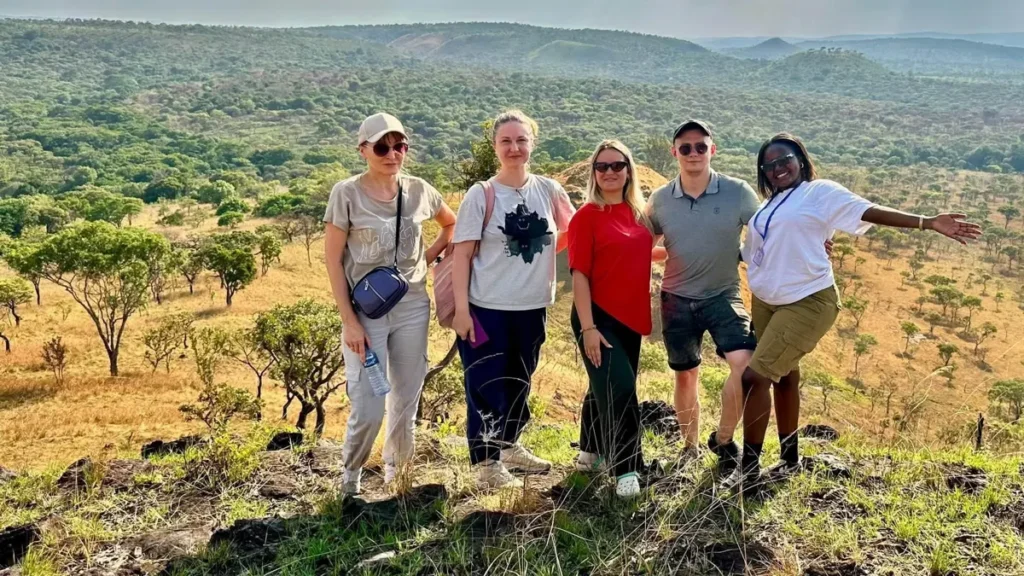
A Ruvubu outing can be approached as a search for a list of animals, or as a chance to understand a landscape. The second approach gives you more to notice even when wildlife remains distant or out of sight. Ground cover, trees, water, tracks and changes in visibility all offer clues to how a place is used. With a guide, these details can become a connected experience instead of separate observations made from a moving vehicle.
Burundi’s tourism ministry places Ruvubu National Park in the country’s northeast and describes a large protected ecosystem with varied wildlife. The exact visitor experience depends on current access, the selected route and the arrangements approved by park staff. This article concentrates on what to look for during an outing. For the wider journey, read our guide to planning a dedicated Ruvubu trip.
Start by looking at the spaces between sightings
Open country can appear empty when you are waiting for something conspicuous to move. Try dividing the view into smaller parts. Notice where grass gives way to trees, where visibility narrows and where a change in the ground interrupts an otherwise continuous slope. Ask the guide which transitions matter locally. A landscape becomes more engaging when you understand why one part differs from another.
This is also a useful way to involve travellers with different interests. Someone who enjoys birds may focus on perches and cover, while a photographer notices the relationship between foreground and distant hills. Neither person needs to wait for a large animal before the outing becomes worthwhile. Share observations without competing to identify the most impressive subject.
Treat the river as a question to explore
The name Ruvubu invites attention to river country, but not every approved route gives the same access or view. Ask how the selected outing relates to water: whether you will observe it directly, see associated vegetation or discuss its wider role from another point. Avoid assuming that every attractive riverbank is a suitable place to stop or leave a vehicle.
Where observation is permitted, compare the surroundings with drier or more open areas already seen. Look at differences in plant density, shade and the kinds of places where birds perch. The guide can help interpret those patterns. Keep the explanation tied to the specific location rather than applying a single rule to the entire park.
Ask what evidence supports an identification
A guide may draw attention to a track, a call or a movement that you would otherwise miss. Instead of asking only for a name, ask which feature makes the identification likely. The answer may involve size, shape, behaviour or context. This turns a sighting into a lesson in observation and makes it easier to remember afterwards.
There will also be uncertain moments. A fleeting view may not allow a confident species identification. Keep that uncertainty in your notes. Do not add an animal to a public trip report solely because it appears on a general park species list. What is known to occur in an area and what your party actually observed are different statements, and both can be recorded honestly.
Give small subjects enough time
Insects, leaves and birds can provide sustained interest when larger wildlife is not visible. If the guide approves a stop, choose one subject and watch for a short interval rather than immediately scanning for something else. You may notice feeding, repeated movement or a relationship with a particular perch. These ordinary behaviours often make a stronger memory than a hurried glimpse of a more famous species.
Keep observation separate from disturbance. Do not approach a nest, move vegetation or handle an animal to make a photograph. If your equipment cannot produce a close image from the permitted position, make a wider picture or simply watch. A successful nature outing does not require every observation to become a publishable photograph.
Let the guide choose the safe position
Before leaving the vehicle or changing position, ask what is appropriate at that stop. The guide’s judgement includes factors that may not be obvious to a visitor. Stay with the agreed group arrangement, avoid sudden movements around wildlife and follow instructions promptly if the situation changes. An attractive angle is not a reason to improvise an approach.
Discuss your interests early so the guide can select suitable opportunities. A birdwatcher wanting patient observation, a family needing frequent breaks and a photographer carrying a heavy lens may need different rhythms. These preferences can often be accommodated through planning; they are harder to resolve once everyone has conflicting expectations in the middle of an outing.
Look for changes in light and distance
Landscape photography in open country often depends on how forms separate from one another. Notice whether a tree stands clearly against the sky or merges into a dark background. Look for an overlapping sequence of near ground, middle distance and farther slopes. A deliberate frame can communicate space even when there is no animal in it.
Do not ask the driver to stop abruptly or place the vehicle somewhere unsuitable to obtain a composition. Explain what has caught your attention and let the guide identify a workable position. If stopping is not possible, keep the observation in your notes. Accepting that some views remain unphotographed can make the day more relaxed for everyone.
Use a field notebook without turning the outing into homework
A useful record can be brief. Note the date, the broad part of the route identified by the guide, the weather you experienced and a few observations. For each subject, distinguish “seen clearly,” “heard” and “possible identification.” Add a short explanation if the guide provided one. This is enough to support a thoughtful travel account later.
Be careful with location detail when sharing wildlife information publicly. Ask the guide whether a precise location is appropriate to publish. A general description of the outing is often sufficient for a travel story. Likewise, seek permission before naming or quoting someone who accompanied the group, and avoid placing private contact details in a caption or report.
Make the day’s logistics support patient observation
Nature observation is difficult to enjoy when the whole party is worried about a late meal or an overlong return drive. Agree on water, food, rest stops and the intended finish before beginning. Tell the team about dietary needs and mobility limitations while the trip is being planned, and ask which facilities can realistically be expected on the selected route.
Build Ruvubu into an itinerary with enough room around it. Depending on your starting point, it may make sense to dedicate separate travel and observation time rather than squeezing everything into one day. M Travel can discuss an appropriate sequence through Plan your trip. Compare the private Burundi packages for routes that give northern nature visits a meaningful place. The aim is to leave with a better understanding of what you observed, not merely a longer checklist.
Further reading and sources
Destination references checked 2026-11-08. Confirm current access and your travel arrangements with the local team.